Can Ayurveda Cure Fissure Without Surgery? What to Expect From an Ayurvedic Specialist

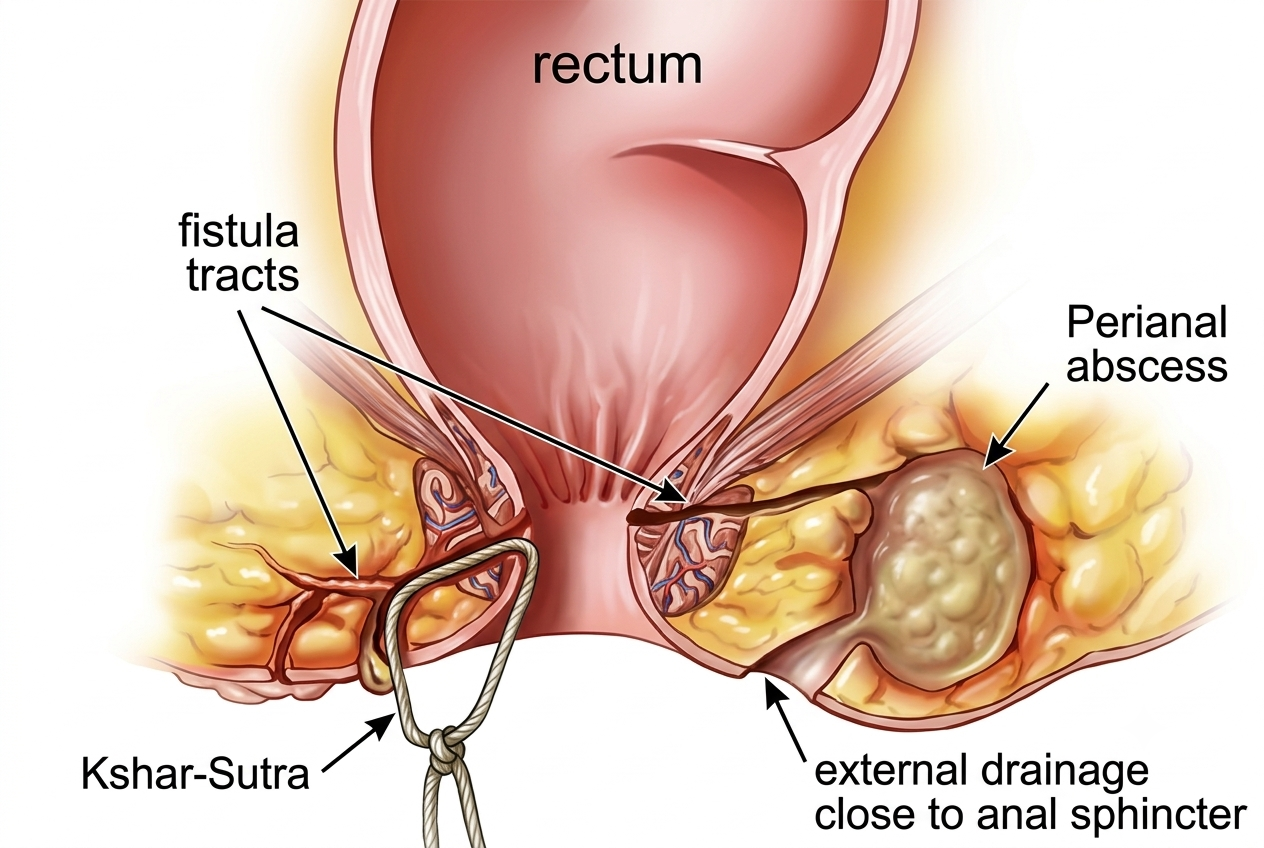
Yes, Ayurveda can effectively cure acute and chronic anal fissures without conventional invasive surgery. Through non-surgical parasurgical therapies like Kshar Karma (medicated alkaline application) and Kshar Sutra, along with herbal formulations and dietary adjustments, Ayurveda relieves internal sphincter spasms, accelerates tissue healing, and stops recurrence. Most patients achieve complete recovery within 2 to 6 weeks.
Understanding Non-Surgical Healing for Anal Fissures
When you have really bad burning, intense pain when you go to the bathroom or rectal bleeding, you may be afraid to have to have a surgical procedure such as a sphincterotomy.
This is an explanation of how specialised Ayurvedic anorectal care cures anal fissures naturally. You will learn about therapies, what to expect during your initial consultation with your specialist and how to avoid a recurrence of pain.
What Is an Anal Fissure and Why Does It Cause Intense Pain?
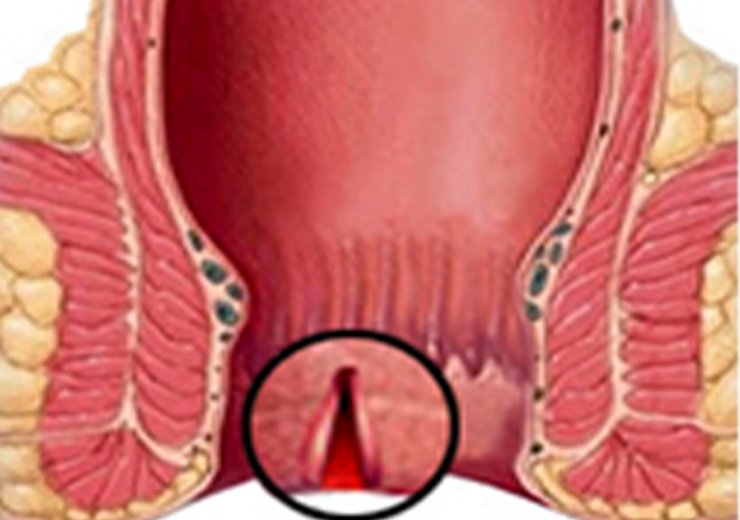
Anal fissure means a small tear or a crack in the thin soft lining (mucosa) of anus. (Parikartika in Ayurveda)
In the event of severe pain, the sphincter muscle will contract leading to a decrease in blood circulation. This poor blood flow will cause the tear to not heal on its own, leading to painful muscle spasms.
Key Symptoms of an Anal Fissure
- Sharp, burning pain: This is during or after going to the toilet and persists for hours.
- Bright red blood: When it can be seen on the toilet tissue or is dripping onto the hard stool.
- Sentinel Pile (Skin Tag): A small skin tag forming near the bottom of a chronic tear.
- Anal Itching and Discharge: Constant itching, due to inflammation around the tear.
How Does Ayurveda Cure Anal Fissures Without Surgery?
Ayurveda treats the underlying cause of fissures in several ways, by balancing Vata Dosha (the dosha related to dryness and movement) and by soothing the hyperactive internal sphincter muscle.
Anorectal treatments by special Ayurveda way heal tissue without disturbing the anal continence unlike conventional surgery where anal tissue is cut.
| Treatment Modality | Conventional Surgery (LIS) | Specialized Ayurvedic Therapy |
| Primary Method | Incision/cutting of sphincter muscle | Medicated herbs & Kshar Karma |
| Hospital Stay | Requires 1–2 days hospitalization | Daycare / Outpatient procedure |
| Incontinence Risk | Low-to-moderate risk | Near zero risk |
| Recovery Time | 4–8 weeks | 2–4 weeks |
| Recurrence Rate | Minimal | Minimal with proper diet |
Key Non-Surgical Ayurvedic Therapies Used by Specialists
Ayurvedic anorectal specialists rely on time-tested parasurgical procedures to heal deep or chronic tears safely.
1. Kshar Karma Application
- A specialized, non-invasive topical application using a purified herbal alkaline solution (Kshar).
- It gently cleanses dead tissue from the fissure bed, reduces local inflammation, and promotes rapid cell regeneration.
2. Kshar Sutra Therapy (For Complex / Sentinel Piles)
- A minimally invasive procedure using a linen thread coated with natural alkaline herbs and turmeric.
- Best suited when a chronic fissure is accompanied by an enlarged sentinel pile tag or complex track.
3. Sitz Bath with Medicated Decoctions (Avagaha Sweda)
- Soaking the lower body in warm water infused with soothing herbs like Panchvalkal or Triphala.
- Directly relaxes anal sphincter spasms and enhances localized blood circulation to speed up healing.
If you are exploring structured treatment options for chronic fissure, you can read more about Ayurvedic Anorectal Treatments at Anocure.
What to Expect During Your Visit to an Ayurvedic Specialist
Visiting an anorectal doctor (Shalya Chikitsak) for the first time is straightforward, comfortable, and discreet.
PATIENT TREATMENT JOURNEY
Step 1: Gentle Visual Diagnosis (Using lubricated Anoscope)
Step 2: Instant Pain Relief (Sitz Bath & Natural Analgesic Ointment)
Step 3: In-Clinic Kshar Karma Procedure (15–20 Mins Daycare)
Step 4: Home Care Protocol (Herbal Laxatives & Dietary Plan)
- Gentle Inspection: The specialist performs a gentle visual examination. Painless digital exploration or a small lubricated anoscope is used only when comfortable.
- Pain Control: Immediate topical natural anesthetics and soothing oils (Jatyadi Taila) are applied to soothe burning sensations.
- Customized Care Plan: Depending on whether your fissure is acute (under 6 weeks) or chronic, the specialist formulates a targeted recovery schedule.
Learn more about specialized medical care options on the Anocure Fissure Treatment.
Dietary Habits That Support Rapid Fissure Healing
Treatment works fastest when combined with daily habits that prevent constipation and hard stools.
Daily Dietary Checklist
- Drink 3–4 Liters of Water Daily: Keeps stools soft and easy to pass.
- Include Soluble Fiber: Eat apples, oats, papaya, psyllium husk, and steamed vegetables.
- Incorporate Healthy Fats: Take 1 teaspoon of pure Cow’s Ghee with warm milk at night to lubricate the digestive tract.
- Avoid Trigger Foods: Stop consuming spicy red chillies, deep-fried fast food, refined flour (maida), and excess caffeine.
FAQs About Non-Surgical Fissure Treatment
1. How long does it take for an anal fissure to heal with Ayurveda?
In case of acute fissures, they heal within 7-14 days with proper diet and herbal application. Fissures with tags in the skin usually heal within 3-6 weeks with proper Ayurvedic treatment.
2. Is Kshar Karma treatment painful?
There is a mild warm or tingling sensation noted during application by most patients. Local soothing oils and warm sitz baths keep pain to a minimum.
3. Can an anal fissure turn into a fistula or piles?
It is not the untreated fissure that forms the piles, but a process of chronic inflammation can cause a skin tag to develop in the periphery of the anus (sentinel skin tag) or the surrounding anal glands to become infected and form an anal abscess or fistula.
4. Will I need bed rest after Ayurvedic fissure treatment?
There is no need for an extended period of bed rest. After a daycare Kshar Karma session, most patients are able to return to light daily activities, or within 24 hours of the treatment.
5. Can fissures recur after complete treatment?
If you have soft stools, then it is unlikely to occur again. Long term prevention is provided by eating a fiber-rich diet and drinking plenty of water.
Key Takeaways for Lasting Relief
Anal fissures typically don’t require conventional invasive surgery. In more than 90% of cases, modern Ayurvedic parasurgical treatments such as Kshar Karma are very effective in treating damaged mucosal tissue without incising the sphincter muscles and risking incontinence.
It is important that medical evaluation occurs early enough to prevent the formation of chronic skin tags or the deep invasion of skin tags in surrounding tissues. Early treatment combined with daily hydration and a diet that’s rich in fiber will ensure a smooth recovery and that you don’t experience the pain again.
To discuss your symptoms confidentially with certified specialists or explore non-surgical treatment plans, visit the Anocure Official Website.